
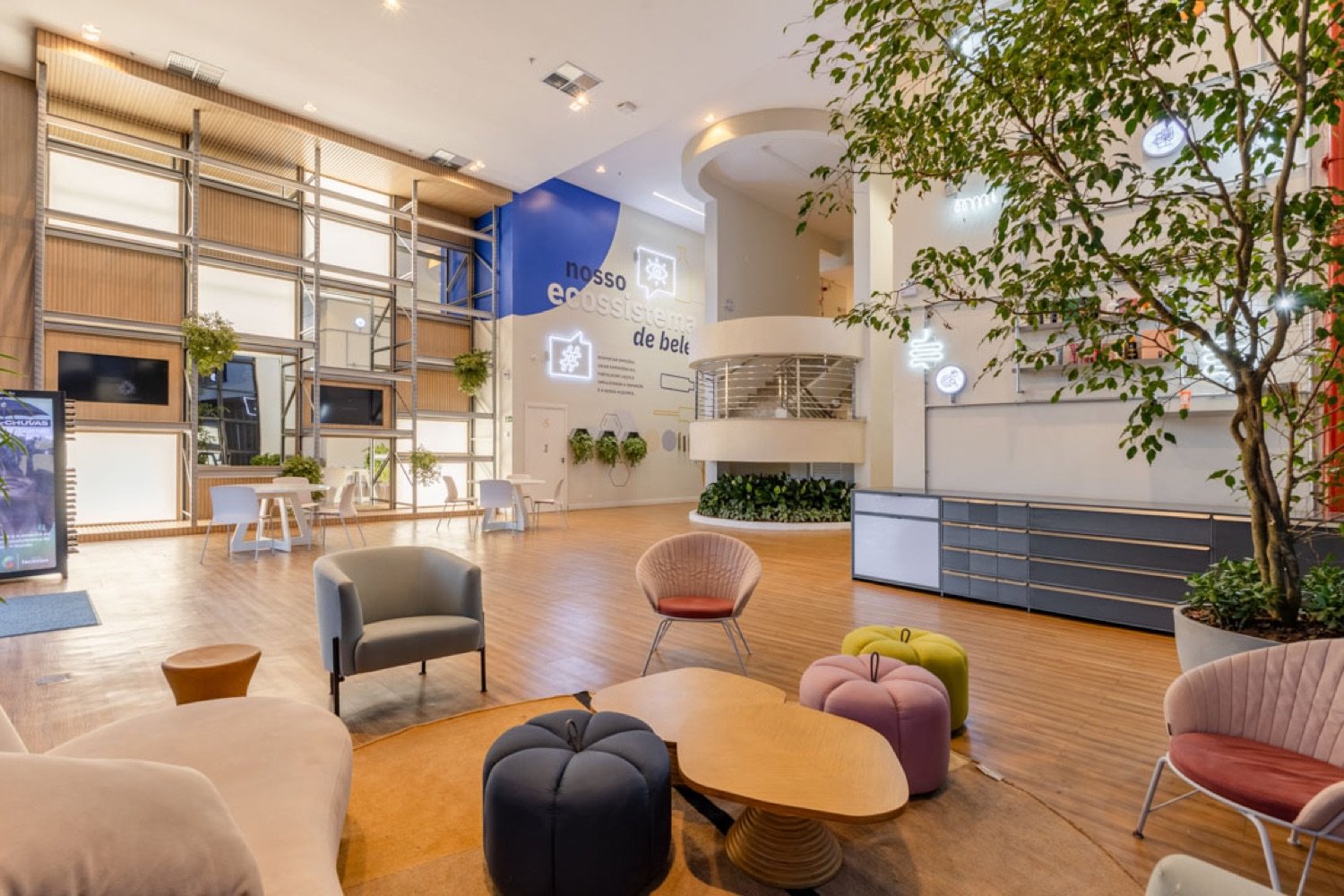
It's not "an office renovation." Corporate architecture is the discipline that turns physical space into a business tool.
Corporate architecture is the specialty that designs the environments where companies operate — headquarters, offices, showrooms, and the support spaces around them. The name sounds straightforward. The practice isn't. What separates it from residential design is the starting point: a home starts from personal taste; a corporate project starts from commercial objectives — how the company operates, sells, hires, and grows.
The three axes where space touches the business
Brand. The space communicates who the company is before anyone says a word. Materials, light, rhythm, and finish level all signal positioning — to clients, to candidates, and to your own team. A space that contradicts the brand undoes, silently, what marketing builds.
People. Layout and design shape behavior: how teams focus, meet, collaborate, and move through the day. The same headcount can perform very differently in two different floor plans — and turnover, engagement, and productivity all feel the difference.
Investment. A corporate build is a significant budget line. It deserves what any serious investment gets: predictability, governance, and a measurable return — not improvisation managed over site visits.
Spatial intelligence: strategy before floor plans
The layer A9 practices under the name spatial intelligence treats physical space as a strategic business variable. In practice, that means the work starts with a diagnosis of the business — not with a drawing. Before the first floor plan, the questions are commercial: How does the company operate today? Where is it going in three years? What behaviors does the space need to produce — and which ones is it producing right now, by accident?
Where corporate architecture applies
- Offices and headquarters — from a single floor to a full corporate campus.
- Brand environments — spaces where the brand is experienced, not just displayed.
- Retail and franchise networks — replicable environments that keep the brand consistent at scale.
- Construction follow-through — because a strategy that doesn't survive the build isn't a strategy.
From strategy to site — without losing the plot
The most common failure in corporate projects isn't bad design. It's good design that doesn't survive execution: decisions diluted on site, substitutions nobody approved, a delivered space that only resembles the plan. That's why A9 stays with every project through OrbitA9 — our follow-through method that keeps strategic decisions intact through construction, with regular site visits, documented progress, and post-move-in follow-up to verify the results the project promised.
A corporate project doesn't end at handover. It ends when the space is doing what the business needed it to do.
If your company is moving, growing, or rethinking how its space works, corporate architecture isn't a cost conversation. It's a performance conversation — and it starts well before the first drawing.