
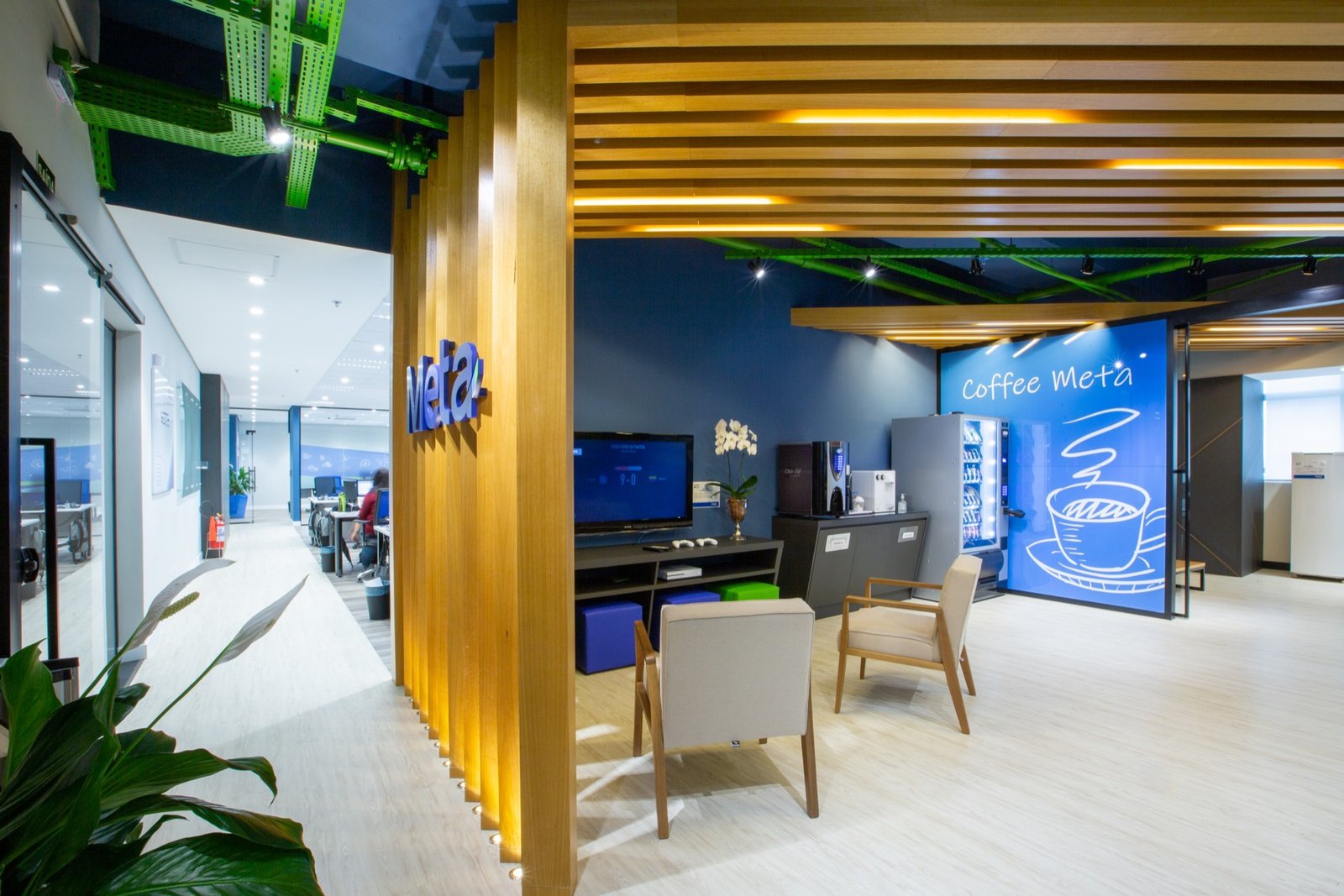
Culture, brand, and experience show up in every board deck — and rarely survive the office they're supposed to live in.
Companies invest heavily in three things they describe as strategic: culture, brand, and experience. Then they hand the one place where all three happen at once — every single day, in front of every employee, client, and candidate — to whoever happens to manage facilities.
That's the disconnect. The office is treated as an operational, facilities-level responsibility. Culture, brand, and experience live somewhere else entirely — in people, in marketing, in customer teams. Those conversations almost never cross. And so the space where the company is most visible is shaped by the department least involved in what the company is trying to say.
The three layers of spatial branding
A space communicates on three layers at once:
- Explicit — logos, value walls, signage. The things you can point at.
- Implicit — lighting, acoustics, temperature, the quality of the furniture. The things you feel before you notice them.
- Behavioral — what the space permits, and what it quietly inhibits. Whether people collaborate or hide, focus or drift.
Most companies invest only in the first layer. The second and third are left to chance — which, in practice, means they're left to whoever bought the cheapest chairs.
The impact is real — and disguised
The consequences don't show up immediately, which is exactly what makes them dangerous. A client loses a little confidence on the way in and never mentions it. A candidate quietly accepts the counteroffer instead. An employee resigns citing "a new challenge." None of it traces cleanly back to the space. All of it is shaped by it.
The space is the most honest communicator a brand has. It tells the truth even when no one is presenting.
Treat the reception like your homepage
The fix isn't a bigger budget. It's a different owner. Investment in the office should sit inside brand strategy, not beneath it. The reception deserves the same rigor a company gives to its website's homepage — because it's doing the same job: it's the first thing a stranger meets, and the fastest signal of who you really are.
When that integration happens — when the people who own brand and culture also own the space — the return usually pays the project back in under two years, through retention on one side and commercial conversion on the other.